Skip to content
If your air conditioner seems to run all day but certain rooms in your Miami home still feel warm or stuffy, the problem may not be the outdoor unit at all. In many cases, the issue is hidden inside the ductwork that distributes conditioned air throughout the house. When dust, pet dander, insulation fibers, and moisture accumulate inside the ducts, airflow becomes restricted and the entire HVAC system has to work harder to maintain comfort.
This is a common issue in South Florida, where air conditioners often operate 12 to 18 hours a day and must remove large amounts of humidity in addition to lowering indoor temperatures. Even moderate airflow restrictions can reduce cooling performance, increase energy use, and place extra strain on blower motors and compressors. Read below to learn how dirty ductwork affects your AC system and why professional air duct cleaning in Miami can improve both comfort and efficiency.
How Your Air Duct System Affects Overall AC Performance

Your duct system is responsible for delivering conditioned air from the air handler to every room in the home. If the ductwork is clean, properly sealed, and unobstructed, the blower can move the designed amount of air across the evaporator coil and throughout the living space. This allows the system to cool and dehumidify efficiently.
When airflow is restricted, the entire HVAC system begins operating outside its intended range. The blower motor must work harder, cooling cycles become longer, and some rooms may remain several degrees warmer than others. In our experience, bedrooms furthest from the air handler are often the first areas where homeowners notice uneven temperatures and weak airflow.
Why Proper Airflow Matters
| HVAC Function | What Adequate Airflow Supports |
|---|---|
| Heat Removal | Allows the evaporator coil to absorb indoor heat efficiently |
| Humidity Control | Removes moisture and keeps indoor humidity near 50–55% |
| Room Balance | Maintains even temperatures throughout the home |
| Equipment Protection | Reduces strain on motors, coils, and compressors |
| Energy Efficiency | Shortens runtime and lowers cooling costs |
When the duct system cannot deliver the airflow the equipment was designed for, comfort declines and component wear accelerates.
How Dust, Debris, and Moisture Build Up Inside Miami Ductwork
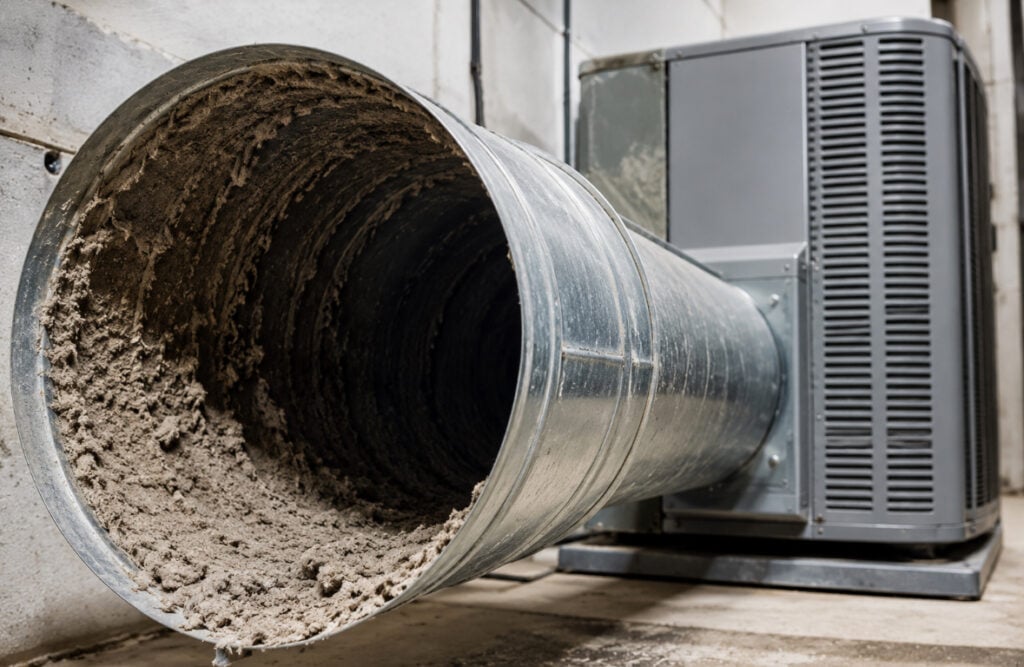
Most homeowners rarely see the inside of their ductwork, but contamination can accumulate gradually over many years. Each time the air conditioner runs, return ducts pull in household dust, pet hair, skin particles, and fabric fibers. Renovation projects can also introduce drywall dust, sawdust, and insulation particles that settle inside the system.
Miami’s humidity adds another layer of complexity. Small duct leaks can draw warm, moist attic air into cooler ducts, creating condensation on interior surfaces. This moisture mixes with dust and organic debris, forming a sticky film that traps additional particles and may support microbial growth over time.
The most common materials found during duct inspections include:
- Household Dust: A mixture of skin cells, fabric fibers, and fine particles that continuously recirculate through the return ducts.
- Pet Hair and Dander: Lightweight debris that collects in duct bends and around blower compartments.
- Construction Residue: Drywall dust, sawdust, and insulation fibers left behind after renovations.
- Attic Debris: Loose insulation and outdoor particles pulled in through leaking duct connections.
- Moisture and Condensation: Humidity that turns dry dust into a sticky layer along duct walls.
- Microbial Buildup: Biological growth that may develop when dust and moisture remain undisturbed.
Over time, this accumulation acts like plaque inside the duct system. Air no longer moves as freely, distant rooms receive less cooling, and the blower must work harder to deliver the same level of comfort throughout the home.
Why Dirty Air Ducts Restrict Airflow and Increase System Strain

Once dust and debris begin accumulating inside the ductwork, your air conditioner has to work much harder to move the same amount of air through the system. Instead of traveling smoothly, conditioned air is forced through narrower passages and around layers of buildup. The result is higher static pressure, longer cooling cycles, and increased stress on the blower motor.
In a properly operating HVAC system, the blower is designed to deliver a specific volume of air across the evaporator coil. When airflow drops, the coil cannot absorb heat and moisture as efficiently. This often leads to reduced cooling capacity, weaker airflow from the vents, and, in more severe cases, frozen evaporator coils.
What Homeowners Commonly Notice
| Symptom | What May Be Happening |
|---|---|
| Weak Airflow | Duct buildup is restricting air movement |
| Rooms Stay Warm | Conditioned air is not reaching distant rooms |
| AC Runs Longer | The system is struggling to satisfy the thermostat |
| Higher Energy Bills | Blower and compressor are working harder |
| Frozen Coil | Airflow has dropped below the equipment’s design range |
If your air conditioner seems to run continuously but your home still feels uncomfortable, the issue may be in the duct system rather than the cooling equipment itself. In these situations, professional AC repair in Miami can help determine whether airflow restrictions are affecting overall performance.
How Duct Contamination Impacts Indoor Air Quality and Humidity Control
Dirty ductwork affects more than just temperature. Every time your AC starts, it circulates air through the same network of supply and return ducts. When those ducts are lined with dust, insulation fibers, pet dander, and other debris, some of those particles can be redistributed throughout your home.
Many Miami homeowners first notice this as a thin layer of dust returning to furniture shortly after cleaning or as increased allergy symptoms when the air conditioner is running. Musty odors are another common complaint, especially when moisture has mixed with debris inside the duct system.
Restricted airflow also interferes with humidity control. Your air conditioner depends on steady airflow across the evaporator coil to remove moisture effectively. When airflow drops, the system may still lower the temperature but struggle to maintain indoor humidity within the ideal 50 to 55 percent range. As a result, your home may feel cool but still damp and uncomfortable.
Warning Signs Your Air Ducts May Be Causing Cooling Problems

Most homeowners do not realize their ductwork is part of the problem until comfort issues become difficult to ignore. Because the ducts are hidden above ceilings and inside walls, the symptoms usually appear elsewhere in the home. If your air conditioner seems to be running normally but comfort continues to decline, the duct system deserves closer attention.
Common Symptoms to Watch For
- Weak Vent Airflow: Supply registers deliver less air than they used to, especially in rooms furthest from the air handler.
- Persistent Hot Spots: Certain bedrooms remain 4 to 8°F warmer than the rest of the home.
- Excess Dust: Furniture and floors collect dust again shortly after cleaning.
- Musty Odors: Stale smells appear when the air conditioner starts.
- Longer Cooling Cycles: The AC runs for extended periods before reaching the thermostat setting.
- Sticky Indoor Air: Humidity remains high even though the temperature appears normal.
When several of these symptoms occur together, the issue often involves both dirty ductwork and reduced HVAC efficiency. A professional inspection can determine whether cleaning, duct sealing, or additional repairs are needed.
How Professional Air Duct Cleaning Restores Airflow and Efficiency
Professional duct cleaning is far more than simply vacuuming around the vents. A qualified HVAC technician inspects the supply and return system, connects high-powered negative-pressure equipment, and uses specialized brushes or agitation tools to remove debris from the full length of the ductwork.
As dust, pet hair, insulation fibers, and construction debris are extracted, internal resistance decreases and airflow improves. In many Miami homes, homeowners notice stronger airflow at the registers, more even temperatures between rooms, and shorter cooling cycles soon after cleaning.
Benefits of Professional Duct Cleaning
| Improvement | How It Helps Your HVAC System |
|---|---|
| Better Airflow | Allows the blower to move air more efficiently |
| Improved Comfort | Reduces hot and cold spots |
| Lower Energy Use | Shorter runtimes can reduce cooling costs |
| Cleaner Indoor Air | Less dust and debris recirculates through the home |
| Reduced Equipment Strain | Motors and compressors operate under less stress |
When performed correctly, air duct cleaning in Miami can improve both comfort and long-term system performance.
The Connection Between Clean Ductwork and Fewer AC Repair Issues
When the blower cannot move the amount of air the system was designed to handle, every major component must work harder to maintain the thermostat setting. Over time, that additional strain can lead to more frequent service calls and shortened equipment life.
Lower Stress on the Blower Motor
The blower motor is responsible for pushing conditioned air through the duct system. When dust and debris restrict airflow, the motor operates under higher static pressure and draws more amperage. This extra workload increases operating temperature and accelerates wear on bearings, capacitors, and motor windings.
Better Protection for the Evaporator Coil
Adequate airflow is essential for proper heat transfer across the evaporator coil. When airflow drops too low, the coil temperature can fall below freezing, causing ice buildup and a complete loss of cooling. Restoring clean, unrestricted ducts helps maintain the airflow needed to prevent frozen coils and repeated no-cooling calls.
Reduced Strain on the Compressor
The compressor depends on stable airflow and refrigerant conditions to operate efficiently. If the indoor coil cannot absorb heat effectively, the compressor may run longer and experience higher operating stress. Over time, this can contribute to overheating and costly compressor failures.
Fewer Preventable Repairs
Systems with proper airflow typically operate closer to manufacturer specifications. Homeowners often notice fewer capacitor failures, less frequent frozen coils, and more consistent cooling performance after addressing duct restrictions and contamination.
Choosing the right HVAC contractor to inspect and clean your ductwork can do more than improve air quality. It can also reduce unnecessary strain on your air conditioning system and help prevent avoidable repairs during Miami’s longest and hottest cooling season.
Why Choose 24/7 Air Conditioning Services in Miami, FL

Dirty ductwork can quietly undermine your air conditioner’s performance for years. Restricted airflow, excess dust, poor humidity control, and longer cooling cycles all place unnecessary stress on your HVAC system and can lead to higher energy bills and more frequent repairs.
24/7 Air Conditioning Services has helped homeowners throughout Miami and Hialeah for more than 20 years. Our licensed technicians perform thorough airflow inspections, professional duct cleaning, and detailed system evaluations to identify the real causes of poor cooling performance.
Whether you need expert air duct cleaning in Miami or targeted HVAC repairs, we provide honest recommendations and practical solutions that improve comfort, indoor air quality, and long-term system efficiency.
Many homeowners think of duct cleaning as an indoor air quality service, but it also plays an important role in protecting the mechanical components of the HVAC system. In our experience, airflow problems caused by dirty or restricted ductwork are often a contributing factor in recurring cooling issues and premature component wear.